
The repair vs junk car call comes down to one number: if the repair estimate tops 50% of your car’s current market value, it isn’t worth fixing — sell it instead. Get the estimate in writing, then compare it to the car’s real value. In Indianapolis, Cash Car Heroes pays cash for the cars that fail the test.
Last updated: August 2026
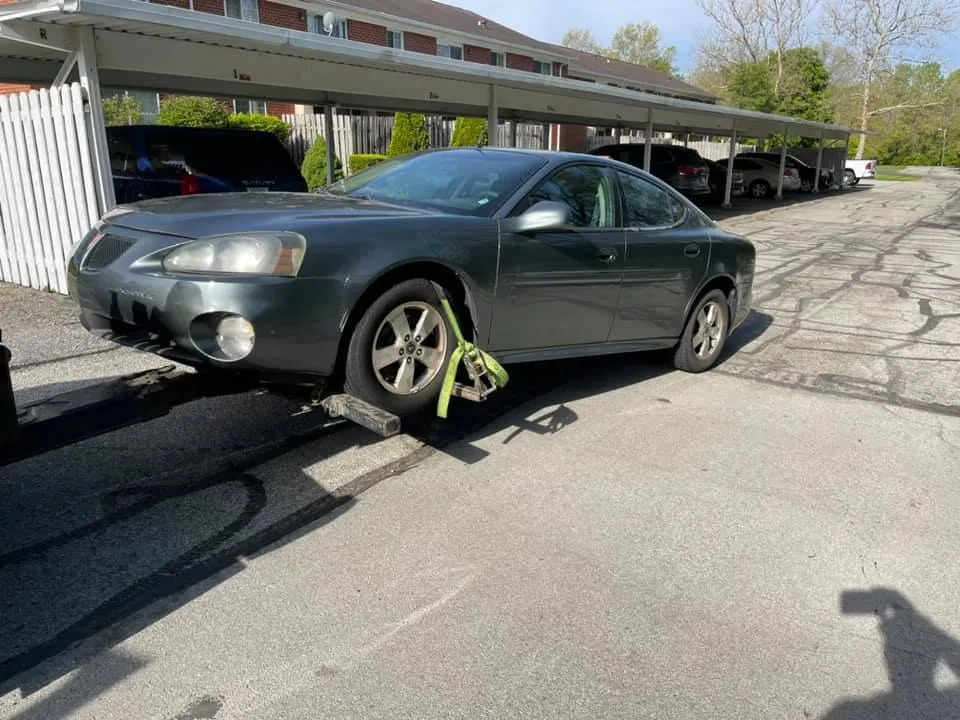
We hear the same story at Cash Car Heroes every week. The shop calls with the estimate. The number is bigger than you feared. And now you’re standing in a parking lot on the south side of Indy trying to decide whether to fix a car you’re not sure deserves it.
This guide gives you the actual decision framework — the 50% rule, the real 2026 repair costs, and the one mental trap that costs Indianapolis sellers the most money. No hedging. By the end you’ll know which side of the line your car is on.
What Is the 50% Rule for Junking a Car?
The 50% rule says a car is not worth repairing when the repair estimate exceeds half of the car’s current market value. A $2,000 car facing a $1,200 repair fails the rule. You would be paying more to bring the car back than the finished car will be worth on its best day.
The rule bends, and anyone who pretends it doesn’t is selling something. A one-owner car with 90,000 miles, a solid body, and its first-ever major failure can justify breaking the rule. A 200,000-mile car that eats a part every other month can’t justify an $800 fix. Our honest opinion, from the cars we tow in every week: past 150,000 miles, 50% is generous. The next failure is usually already loading.
Repair vs Junk Car: How to Run the Numbers
Three steps. Fifteen minutes. You need a written estimate and a value lookup, nothing else.
- Find the car’s real value. Look up the private-party value on a pricing guide like Kelley Blue Book or Edmunds — and be brutal about the condition rating. “Runs and drives” and “won’t start” are different planets. Our guide to what junk cars are actually worth in Indianapolis breaks down how buyers price the low end.
- Get the repair estimate in writing. Not a phone guess — a written quote with parts and labor split out. Labor alone runs $120–$159 per hour at nearly half of U.S. repair shops (PartsTech, 2025), so a “small” job grows fast.
- Do the division. Estimate ÷ car value. Over 50%, the car fails the rule. Under 50%, run one more check: divide the repair cost by the number of months you realistically expect to keep the car, and compare that to a monthly payment on a replacement.
That last check is Consumer Reports’ own test (Consumer Reports, 2026), and it’s the fairest tiebreaker we know. A $1,800 repair on a car you’ll drive two more years is $75 a month. Nobody’s leasing you anything for $75 a month.
One caveat we’ll admit up front: we can’t tell you your exact car’s value from a blog post, and neither can anyone else. Any buyer who quotes you a dollar-perfect number sight unseen is guessing.
How Much Do Major Car Repairs Cost in 2026?
Repair bills are not what they were. The federal price index for vehicle maintenance and repair has climbed 58% since January 2019 (U.S. Bureau of Labor Statistics, 2026), and shop labor rates now top $200 an hour in some states (AAA, 2026). Here’s what the repairs that total older cars actually cost:
| Repair | Typical 2026 cost | On a 10+ year old car, that's usually... |
|---|---|---|
| Transmission replacement | $6,166–$6,685 (RepairPal, 2026) | More than the entire car is worth |
| Head gasket replacement | $2,538–$3,337 (RepairPal, 2026) | Past 50% of value on most older sedans |
| Shop labor alone | $120–$159/hour at nearly half of U.S. shops (PartsTech, 2025) | Why even “minor” jobs clear $500 |
We won’t print one national number for engine replacement, because the honest answer depends entirely on the engine — used, remanufactured, or new. What we can tell you from experience: when an engine dies in a car more than ten years old, the estimate almost never passes the 50% test.
Run the math on a real example. A transmission quote of $6,400 against a sedan worth $3,000 is 213% of the car’s value. That’s not a repair decision anymore. That’s a donation to your transmission shop.
Estimate bigger than the car? Skip the repair and find out what your car is worth as-is. Cash Car Heroes quotes in 10–15 minutes during business hours, 7 days a week, 8am–8pm. Get your free quote →
When Is a Car Worth Fixing?
A car is worth fixing when the repair is a first-time failure, costs well under half the car’s value, and the rest of the car is sound — straight body, no frame rust, a maintenance history you trust. In that case, the car you know usually beats the used car you don’t.
That’s not just us being fair. According to John Ibbotson, chief technician at Consumer Reports’ Auto Test Center, “you probably know what problems exist in the car you have, while buying another one could open up a whole new can of worms” (Consumer Reports, 2026).
The replacement side of the ledger is ugly right now. AAA puts the full cost of owning and operating a new vehicle at $11,577 a year — $964.78 every month (AAA, 2025). Against that, a $1,500 brake-and-suspension refresh on an otherwise healthy Camry is a bargain.
Yes, we buy cars that fail the 50% test for a living. We’re still telling you: if your car passes it, fix the car.
When Should You Junk Your Car Instead?
Junk the car when the math fails or the pattern is obvious. One of these is a signal; two or more is the answer:
- The repair estimate is more than 50% of the car’s market value
- This is the second major repair in the last 6-12 months
- Rust has moved from cosmetic to structural — rocker panels, subframe, suspension mounts
- Multiple systems are failing at once (engine light, transmission slip, electrical gremlins)
- You no longer trust it on I-465, or wouldn’t put your kid in it
- It’s 15+ years old and facing any repair from the table above
The pattern matters more than any single breakdown. A car that strands you twice in a year has told you its plan for next year.
The Sunk Cost Trap: “But I Just Put $2,000 Into It”
We hear this one almost daily, so let’s kill it directly: the $2,000 you already spent is gone. It’s gone whether you fix the car again or sell it today. Spending more to “protect” money you can’t get back is the sunk cost fallacy (The Decision Lab, 2026), and it’s the single most expensive mistake we watch Indianapolis sellers make.
The only question that matters is the next dollar: does THIS repair, judged against the car’s value TODAY, pass the 50% rule? Last month’s repair only counts if it made the car reliable — and if you’re reading this, it didn’t.
What a Car That Isn’t Worth Fixing Is Still Worth in Indianapolis
Here’s the part most repair-or-replace guides skip: failing the 50% rule doesn’t make your car worthless. Junk car buyers price vehicles on parts and scrap metal value, not on whether they start. The transmission that’s dead weight to you doesn’t erase the value of the catalytic converter, wheels, body panels, and steel around it.
That’s exactly what we do at Cash Car Heroes. We’re a locally family-owned, licensed, bonded, and insured auto salvage recycler on Stanley Ave, and we buy cars that don’t run, wrecked and damaged cars — any condition, across Indianapolis, Greenwood, Beech Grove, Speedway, and all of Central Indiana. Free towing on every pickup, never deducted from the offer. Cash or check on the spot. 86% of accepted offers get picked up the same day. And 1,219+ Google reviews at 4.8 stars say we do what we quote.
Selling is simpler than the repair would have been: here’s how the whole process works, and our step-by-step Indianapolis selling guide covers the details. Have your title ready to sign over — the Indiana BMV explains the transfer rules (Indiana BMV, 2026) — and if the title is missing, ask us; it’s case-by-case, not an automatic no.
Done doing repair math? Call or text (317) 538-4824 and a real person will quote your car in 10–15 minutes — running or not, 7 days a week. Turn your not-worth-fixing car into cash →
Frequently Asked Questions
At what point is a car not worth fixing?
A car stops being worth fixing when one repair costs more than 50% of its market value, or when major repairs keep landing every few months. A $2,800 head gasket on a $2,000 sedan fails instantly. Structural rust, stacked warning lights, and a second transmission send the same message: stop spending.
Is it worth fixing up a car before selling it?
Usually not for an older car. Junk car buyers price vehicles on parts and scrap value, so a $6,000 transmission almost never adds $6,000 to an offer. Cash Car Heroes buys cars in any condition, running or not, which means you can skip the repair entirely and keep that money in your pocket.
How do I find out what my car is actually worth?
Look up the private-party value on a pricing guide like Kelley Blue Book or Edmunds using an honest condition rating, then get a real offer in writing. A Cash Car Heroes quote takes 10-15 minutes during business hours. The written offer is the number that matters — not the asking prices on similar listings.
Should I junk a car I just spent money repairing?
If it needs another major repair now, yes. The money you already spent is gone whether you fix it or sell it — chasing it is the sunk cost fallacy. Judge only the next repair against the car’s current value. Past repairs only count if they made the car reliable, and a new failure says they didn’t.
Can I sell a car with a blown engine or bad transmission in Indianapolis?
Yes. Cash Car Heroes buys non-running cars across Indianapolis and Central Indiana every week, with free towing included on every pickup. About 86% of accepted offers are picked up the same day, and payment is cash or check on the spot. A dead drivetrain lowers the offer — it never blocks the sale.
Is it better to repair my car or buy another one?
Run the Consumer Reports test: divide the repair cost by the months you expect to keep the car. If that beats a monthly payment — AAA puts new-car ownership at $964.78 a month (AAA, 2025) — repair it. If repairs keep coming or one estimate tops the 50% rule, put the money toward the replacement instead.
Still on the fence? Check our FAQ or call (317) 538-4824 — worst case, you’ll know exactly what your car is worth in 15 minutes, and the decision stops being a guess.
Get Your Cash Offer Now!
Free • No Obligation • Takes 60 Seconds